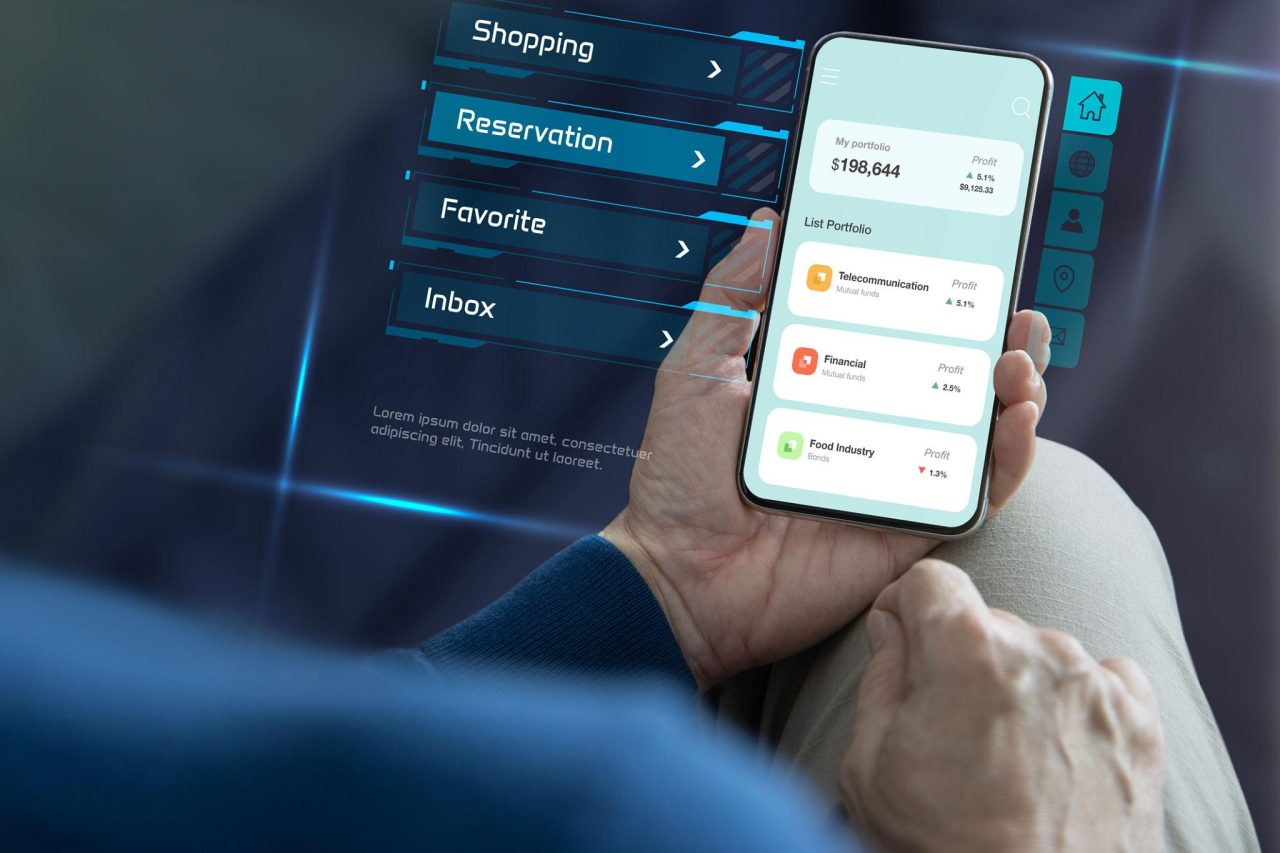
Many companies ask the same question: do we need our own mobile app, or are our website and existing channels enough? Getting it wrong in either direction is expensive. An app nobody opens still costs money to build and maintain, while missing an app your customers or staff genuinely need keeps work manual and scattered.
This article gives you practical questions to decide with: the signs that a company needs an app, when a website or an off-the-shelf tool is enough, and what to budget for before you start.
What an app does that a website struggles to do
A website suits people who visit once or a few times: they find you, read, ask for a quote or get in touch. An app earns its place through repeated use by people you already know. What an app adds:
- A persistent account: users sign in once and find their orders, balance and history without re-entering details.
- Push notifications: telling a customer about an order or appointment, or a staff member about a new task, at the right moment.
- Device features: the camera for a document or proof of delivery, location for field work, and payment through your contracted gateway.
- Working on a weak connection: storing some data on the device and syncing later, which matters for field teams.
- Faster repeat tasks: reordering, topping up a balance, checking a status or recording attendance is quicker in an app built for it.
Signs your company needs an app
A competitor having an app is not a reason. Ask these questions about your own business:
- Do the same customers deal with you repeatedly? Weekly orders, recurring bookings, subscriptions, wallets or balances.
- Do you have staff in the field? Drivers, maintenance technicians, sales reps or site supervisors who need to enter data, take photos and update statuses from a phone.
- Do you need reliable notifications? Appointment reminders, order status changes, or telling a parent about a purchase.
- Does the service depend on device features? Location, camera or quick sign-in.
- Is there a back-end system customers or staff should reach? An ERP or order system, with the app as its front end.
If you answer yes to two or more, an app deserves serious study. If every answer is no, a good website is usually enough.
When you do not need an app
- When most visitors come once, looking for information or a quote.
- When the content is purely informational: about us, services, a contact form. A responsive website fits better and costs less.
- When an existing product already solves the problem, such as a POS or booking system that ships with its own app.
It also helps to know that Apple's App Review Guidelines (section 4.2) expect an app to offer features, content and UI that go beyond a repackaged website. A cosmetic "app" wrapped around your site may simply be rejected from the App Store.
A customer app or a staff app?
The two serve different goals and are designed differently:
| Item | Customer app | Staff (internal) app |
|---|---|---|
| Goal | Ordering, payment, tracking, loyalty | Doing tasks and capturing data in the field |
| Distribution | Public on the App Store and Google Play | Through the stores or private company distribution |
| Key criterion | Easy to use from the first session | Speed, reliability, working on weak networks |
| Integration | Payment gateway, order system, notifications | ERP, permissions, reporting |
Some systems need both: an admin dashboard, an app for the driver or technician, and an app or portal for the customer.
An example from our work: a school wallet app
Maham Pro developed the Masrof school wallet app with Flutter for iOS and Android. The need is clear: parents use it repeatedly to top up a balance, follow their children's purchases from school canteens and see products and prices. It is a textbook case for an app: a known user, frequent use and a balance tied to an account.
Why we build with Flutter
Maham Pro builds its apps with Flutter, an open-source framework supported by Google. It produces iOS and Android apps from a single codebase written in Dart, compiled to machine code for release. In practice, features are built once for both platforms; the app still has to be tested on devices for each platform and set up for each store's requirements. Flutter also supports right-to-left layouts, which is essential for an Arabic-first app.
What to budget for before deciding
- Build cost: depends on features, integrations and design. Read our mobile app cost guide, and treat the packages on the pricing page as starting points.
- Store fees: the Apple Developer Program costs USD 99 per membership year, and Google Play charges a one-time USD 25 registration fee, according to their official pages.
- Server and back end: most business apps need a server, an admin panel and APIs.
- Maintenance: operating system releases and store policy changes mean the app needs regular updates.
- Privacy: both stores require a privacy policy link, and if users can create an account, they must be able to delete it from within the app. Collecting personal data in Saudi Arabia also falls under the Personal Data Protection Law, overseen by SDAIA.
A quick decision checklist
| Question | If the answer is yes |
|---|---|
| Is use frequent, by known customers? | Strong case for an app |
| Do you have field teams working from phones? | An internal staff app |
| Is the content purely informational? | Start with a website |
| Does an existing product fully solve the problem? | Compare its cost with custom development |
| Do you have a back end (ERP or orders)? | Plan the integration from day one |
FAQ
Should I start with an app or a website?
If you have no website yet, usually start there; it serves search and introductions. The app comes when repeated use or field work creates the need.
Do I need two separate apps for iOS and Android?
With Flutter there is one codebase for both platforms, which is then published to each store according to its requirements.
Can the app connect to Odoo?
Yes. An app can talk to a back end such as Odoo through APIs; the integration scope is set during requirements analysis.
Next step
If you see the signs of needing an app, the first step is a clear scope. Explore our mobile app development service and the app development stages, or book a free 30-minute introductory session to talk your idea through.